Optimize Work Order Scheduling with the Sequencer
Scheduling work sequences is a critical element for ensuring efficiency and punctuality in production. Properly managing the order of operations and resource assignments can make the difference between a smooth production line and one subject to delays and inefficiencies.
In manual kanban systems, this activity presents a series of challenges: from the difficulty of keeping physical cards up to date, to the risk of data loss or confusion between multiple orders, and the limited visibility into the order status. Operators and supervisors are forced to manually manage every change to the sequence, often with the help of spreadsheets, increasing the margin for error and the time required for updates.
In electronic kanban systems, digitization allows for real-time traceability and improved visibility, but it doesn’t solve the challenges related to optimizing work sequences and automatically assigning orders.
To address this gap, KanbanBOX developed the Sequencer.
What is the Sequencer, Explained Simply
The Sequencer is an advanced feature of KanbanBOX designed to optimize resource management and make production scheduling smoother and more efficient.
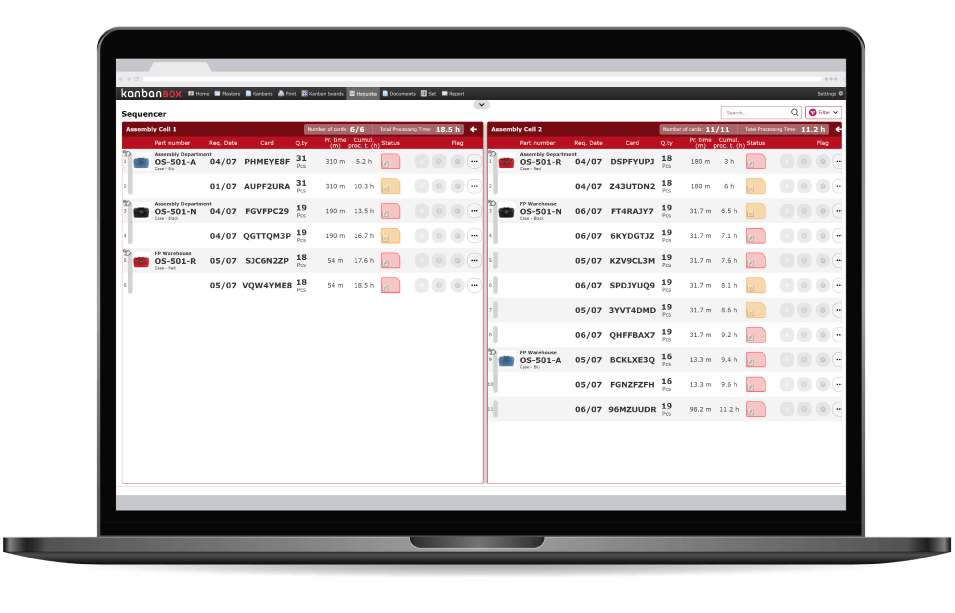
With this tool, each resource (machine, work cell, or operator) has access to a digital board that displays the assigned kanban cards (or closed orders) in the order of processing.
This allows the operator, as well as the Production Manager, to easily follow the work order, access data on each card, print them, add notes, report urgent issues or stockouts, all without leaving the Sequencer board.
Additionally, the Production Manager, with access to the boards of all resources, can reorganize the order of the cards and assign them to different resources. This enables real-time updates to the work order and production optimization based on needs.
The Problems the Sequencer Solves in Production Scheduling
The Sequencer addresses common production scheduling issues that slow down efficiency and increase the risk of errors. Let’s look at the main ones.
Lack of Visibility and Difficulty Balancing Workload
The Production Manager has to manage a complex system with many elements to coordinate: kanban components and closed orders, deadlines, machines, operators, workloads, urgencies, and priorities. This overload of information makes it hard to maintain a clear overview, which is essential to balance workloads between resources and quickly identify problems or delays that could hinder the production process.
The Sequencer solves this by centralizing all resource information into a single interface. The manager can access a real-time, clear overview of all resources, with updated details on workload per resource, urgencies, and progress. This enables effective workload balancing, quick identification of bottlenecks, and timely intervention to optimize production.
Lack of Standard Logic in Production Sorting
When production order is established solely based on the manager’s experience, without an objective or data-driven system, subjective decisions can arise that do not always reflect actual priorities, causing inefficiencies, planning errors, and suboptimal resource management.
The Sequencer solves this problem by replacing experience-based management with standard, objective sequencing logic. Production orders are entered into the sequence as soon as:
- A kanban card is released
- An Excel import is made
- An order is automatically imported from the integrated ERP.
In addition to FIFO (first-come, first-served), sequencing can be based on requested dates or specific logic (Product Wheel, Product Wheel with EPEI). This provides more precise and consistent planning over time, based on standardized and optimized logic.
However, the Production Manager still has the option to manually change the order based on priority, urgencies, and issues such as material shortages.
Difficulty Updating Production Schedules in Real-Time
Physical boards or paper with production orders delivered to operators in the morning quickly become outdated when there are changes during the day. Making adjustments mid-process becomes difficult, and if multiple changes occur, it’s hard to determine which version of the production order is correct, creating confusion and potential errors.
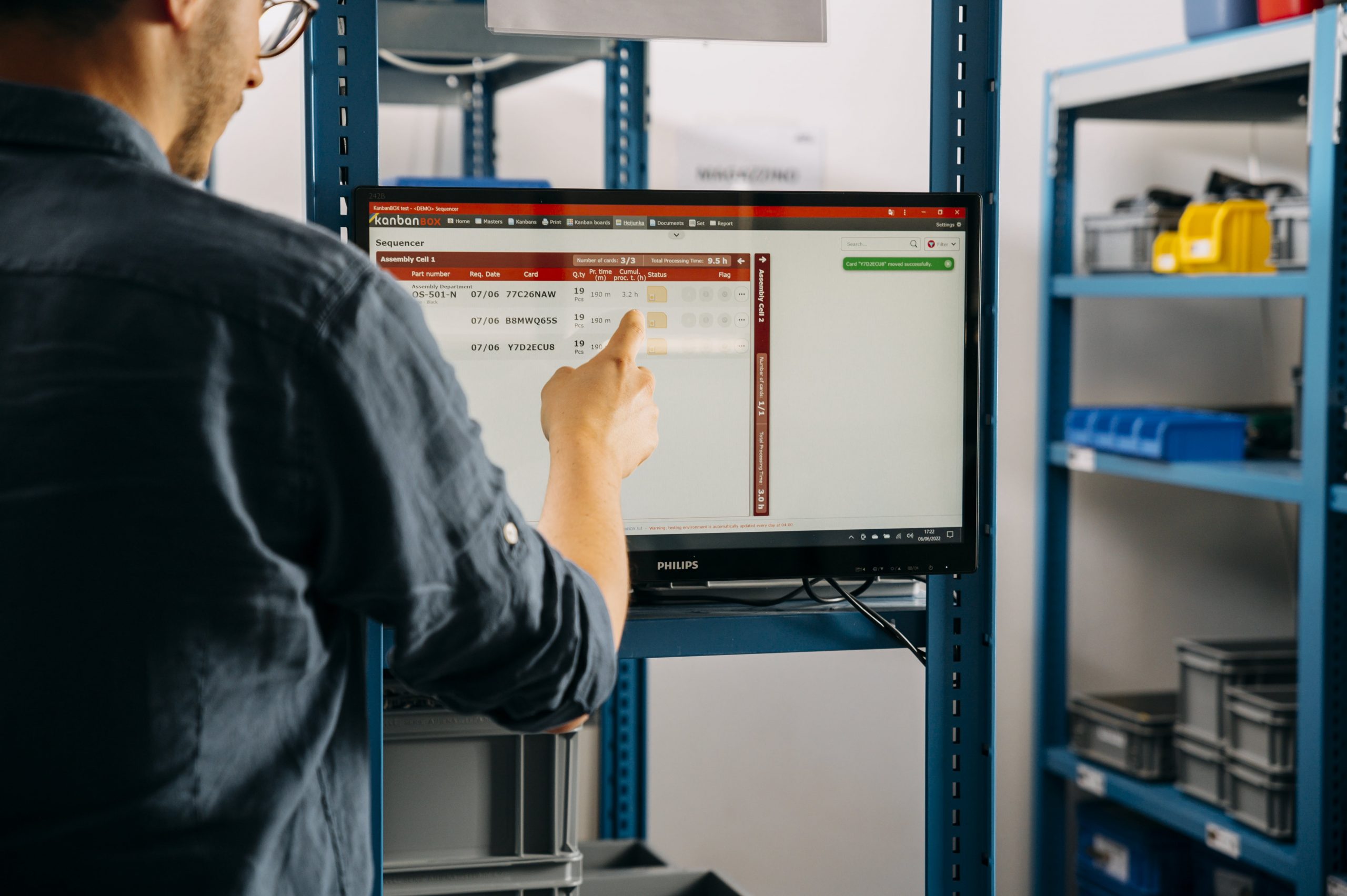
The Sequencer solves this by centralizing production schedule management in a digital system. Each update, made by the Production Manager simply by moving the virtual card along the work order or between resources, is immediately broadcast in real time to all involved resources’ interfaces. This ensures that information is always accurate and accessible to those involved, eliminating the need for manual adjustments and improving communication and coordination across departments.
Limited Autonomy and Visibility for Operators
Operators, often limited by fragmented and incomplete information, have reduced visibility of the work sequence. This compromises their autonomy, and if issues arise, they must stop work to report them to the department head or wait for a decision from above. If the manager is unavailable due to other urgencies, a decision-making bottleneck is created. As a result, there’s an increased dependency on supervisors, and responsiveness to urgent or unexpected problems is slowed, hindering overall process efficiency.
The Sequencer solves this by providing operators with full visibility of their work sequence, with a customizable interface thanks to filters. Operators can independently manage their tasks, view priorities, report issues (such as stockouts), and update card statuses without constantly depending on the supervisor.
Coordination Problems in Multi-Stage Productions
In a production environment with multi-stage processes, maintaining effective coordination between different stages and resources is challenging. Each process may have different priorities and timelines, making it difficult to optimize the overall workflow. The risk is creating delays or urgencies, which compromise efficiency and timely deliveries.
The Sequencer, together with the Multi-Process Kanban feature [discover more here], solves this problem by centralizing coordination of all processes in a single platform. It enables real-time monitoring and management of work sequences for each process, balancing workloads and synchronizing resources across different production stages to ensure that the right component is available at the right time and in the correct sequence.
A Step Further Toward the Smart Factory: Integration Between Sequencer and Machines
For those aiming for a highly digitalized and connected production facility, KanbanBOX can be integrated directly with compatible production machinery via APIs.
This allows the machine to automatically receive information about the next part to be worked on and start production without manual intervention. As a result, downtime, operational errors, and low-value-added activities are reduced, improving the continuity of the production flow.
The integration also makes production more responsive to changes in priority, increases traceability of operations, and allows for real-time synchronization between manufacturing, logistics, and procurement, creating a truly interconnected system focused on Lean Manufacturing.
Why the Sequencer is Becoming an Increasingly Popular Solution Among KanbanBOX Customers
As highlighted, the Sequencer is a powerful tool that solves a series of critical problems in scheduling and managing orders, enabling companies to successfully face the challenges of modern planning, ensuring a more agile, accurate, and collaborative production process.
It’s no surprise that more and more KanbanBOX customers are opting to activate the Sequencer module, eager to quickly gain the following advantages:
- Full visibility into sequences and workloads across the entire production line
- Semi-automatic scheduling of orders, both kanban and closed, including those imported from the ERP
- Easy modification of the production sequence with real-time updates
- Operator visibility and varying levels of management autonomy
- Full control of the production sequence, even in multi-process operations
If you also want to optimize the management of your production department, contact your KanbanBOX representative or fill out the form below. Together, we’ll identify the best process to integrate the Sequencer into your production department!