15 Years of KanbanBOX told by the Founding Partners
KanbanBOX turns 15. A major milestone, especially considering the long journey behind it: from the initial idea to its evolution, from the people who believed in the project from day one to the first national and international customers, all the way to the thousands of users who rely on the software today.
To tell this story, we interviewed the founding partners of KanbanBOX, Matteo Biagini, Guido Bonuzzi e Francesco Dall’Oca, retracing with them the early challenges and the evolution of the company.

Let’s start from the beginning: how did you meet?
Francesco: The three of us were studying Management Engineering at the University of Vicenza (Italy). Guido and I used to commute on the same train line. Spending hours together on trains and studying for exams, we became friends.
We met Matteo through JEST, the Junior Enterprise association of the Management Engineering department in Vicenza. It’s an association that helps students get closer to the business world through self-organized study–work groups focused on developing services aligned with market needs.
We met at the association’s very first meeting, there were only 7 or 8 students. Together we worked on many projects, including Becoming Manager, an event we still support today as sponsors.
Is that where the idea of KanbanBOX was born?
Guido: Not KanbanBOX itself, but definitely the foundations that later led to it.
On one side, that environment nurtured key values such as entrepreneurship, collaboration, and the habit of looking for concrete solutions to real market needs. On the other, it helped us build technical skills.
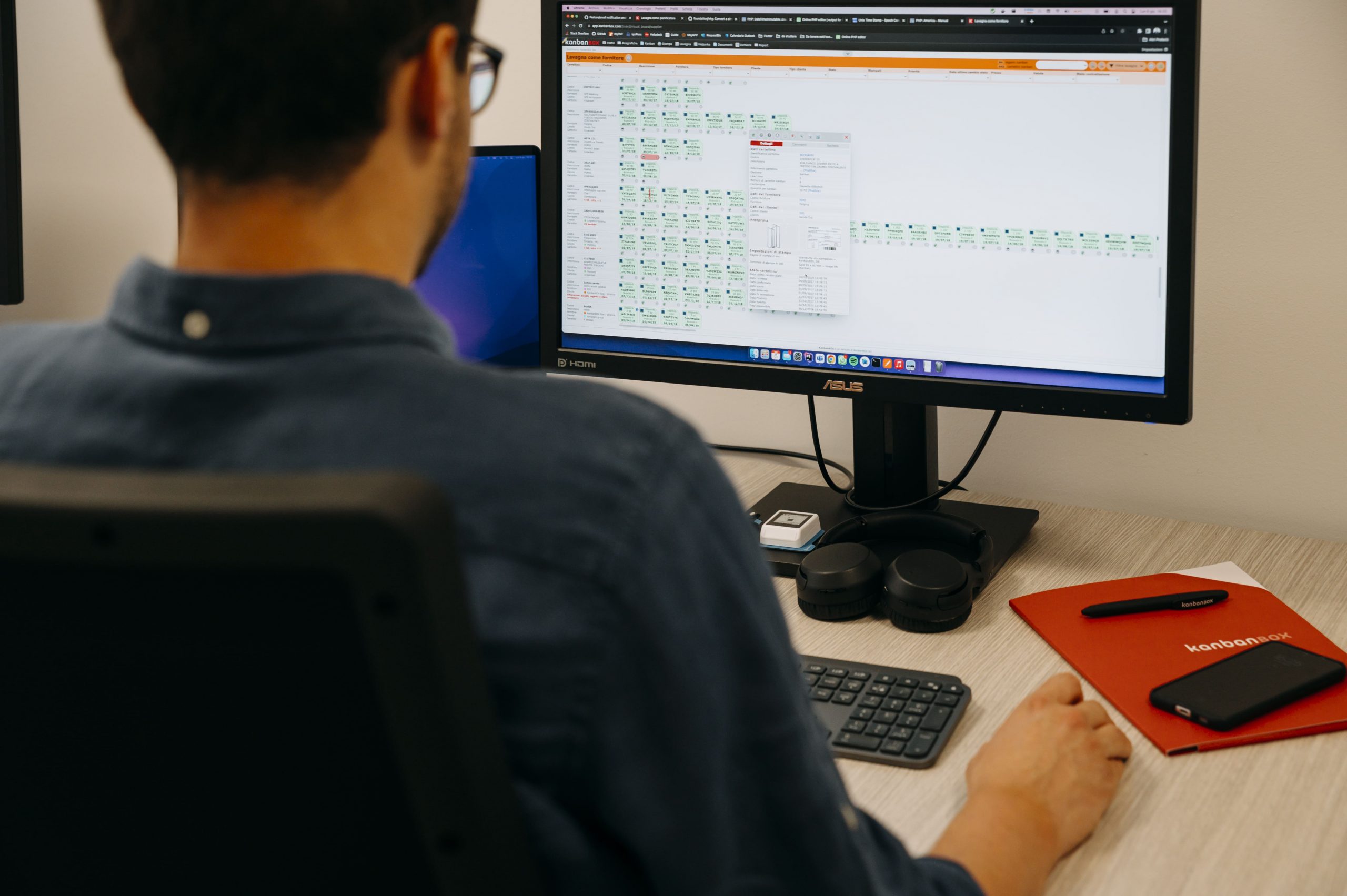
In particular, Matteo and I worked on a project focused on learning how to develop software and websites using PHP. That’s where our “developer mindset” was born, something that later proved essential in turning an idea into a real platform.
So when did the idea of KanbanBOX actually come about?
Matteo: Several years later. By then, we had graduated and were working together as Lean consultants on transformation projects and kanban implementations.
We kept running into the same issues over and over again:
How do you manage the data needed to size a kanban system?
How do you involve suppliers?
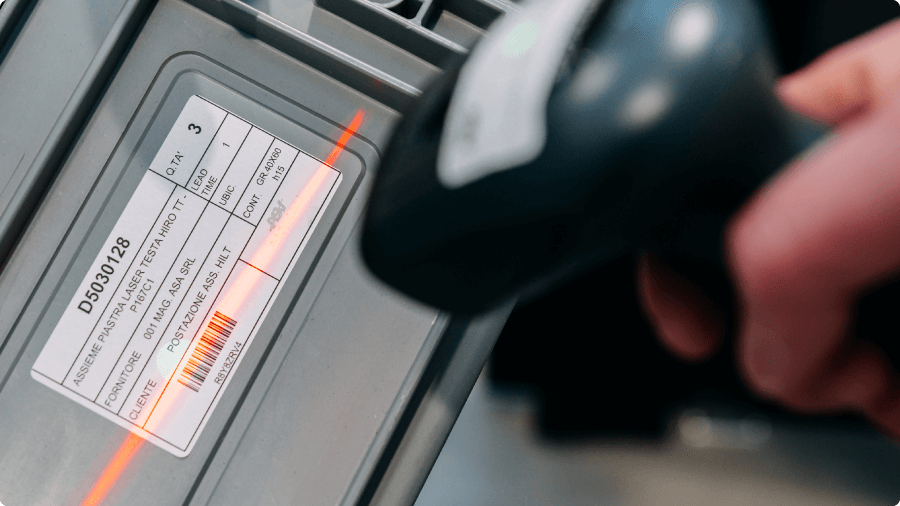
And above all… who actually wants to print, laminate, and cut 3,000 kanban cards?!
So we started thinking about tools we could develop for kanban, but not as a “closed” tool. Those were the years when social networks like Facebook were taking off in Italy. That inspired the idea of building a kanban tool that not only solved the classic problems of kanban, but also enabled collaboration and networking with suppliers.
Francesco:At the time, we didn’t even know that this type of software existed, what we now call electronic kanban software or software for implementing an electronic kanban system. In Europe, there were no such solutions yet, we were the first. Later we discovered that in the US there were a few tools in this category, but without the collaborative supplier component that was central to our vision.
Another key aspect was data tracking, which is essential for building statistics and supporting continuous improvement in true Lean fashion.
We realized we had identified a real gap in the market that matched our skills perfectly: Lean expertise gained through years of consulting and hands-on experience, combined with strong software development capabilities.
How did you come up with the name KanbanBOX?
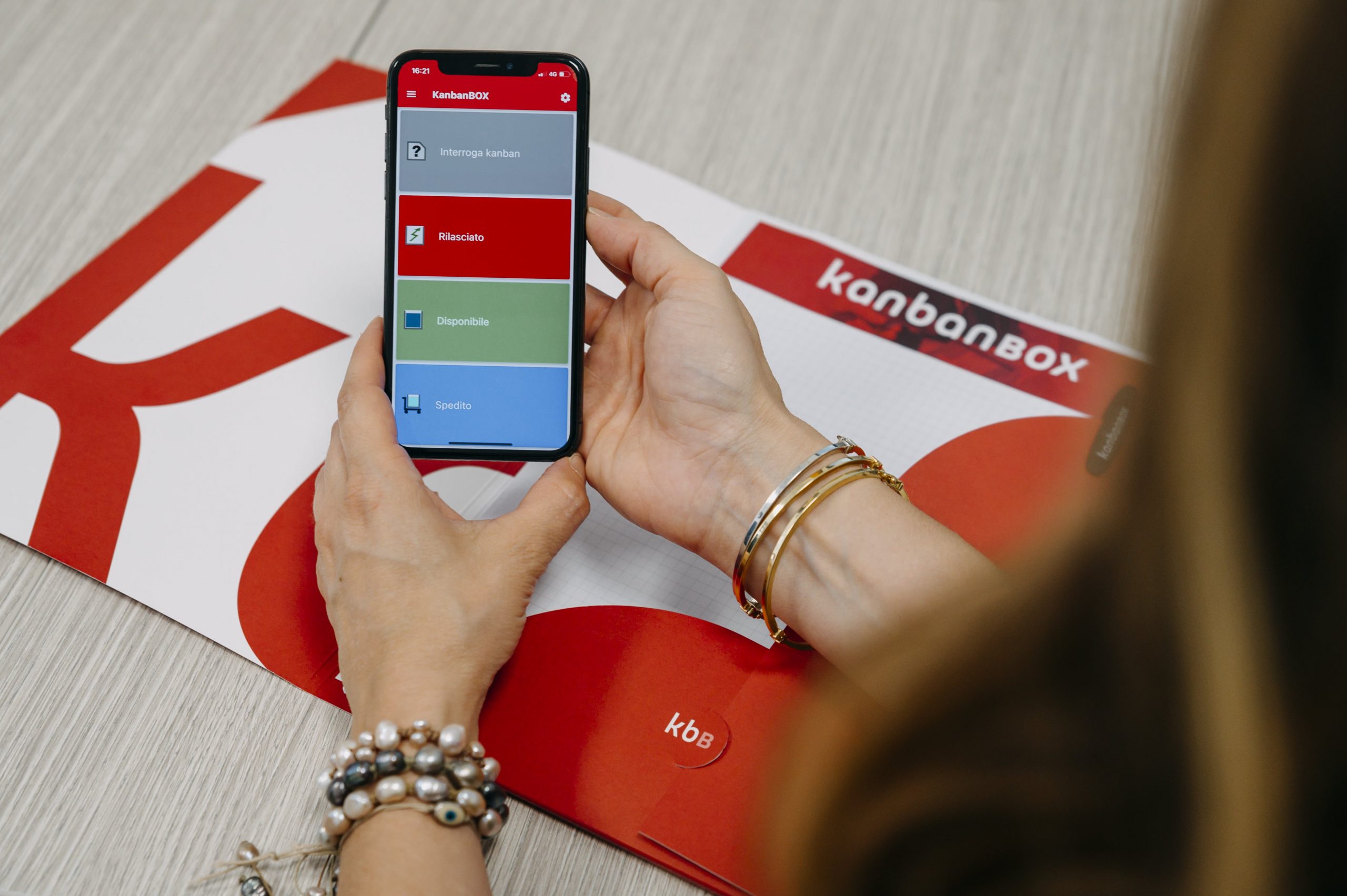
Matteo: Anyone familiar with kanban knows that the kanban box is the container where paper kanban cards are collected after being removed from containers, before being placed back on the boards. We wanted to create that container, but in digital form!
It sounded good, matched our purpose and, not a small detail, the domain www.kanbanbox.com was available. Such a perfect combination that we didn’t even need to discuss it.
Guido: The only small issue is that it’s not the most intuitive name for people unfamiliar with Lean. Over the years we’ve heard some memorable variations: Kan Ban Box, Canban box, Kanbox, Kanbau, Canbanboc. We’ve had a few good laughs about it.
What were the first challenges you faced?
Guido: At the beginning, there was definitely some market skepticism toward such a tiny company. After all, we were just three guys, four when we hired our first employee, Marco (who still works at KanbanBOX today).
Another challenge was the technological maturity of the market. We proposed KanbanBOX as a web-based solution at a time when most companies were still using only locally installed software. Cloud solutions were viewed with suspicion, which slowed adoption and put the project’s economic sustainability at risk.
Francesco: Even before that, the real challenge was finding companies interested in the software. It was a completely new category, so while there were almost no competitors, there were also very few companies actively looking for such a solution.
Back then, not many companies really understood kanban. Those that used it saw it as a simple operational technique. As a result, KanbanBOX was perceived merely as an “upgrade” of traditional kanban, not as a strategic organizational tool.
This limitation became especially evident with our first US customers, where kanban is considered not just a tool, but a true Lean strategic choice.
Matteo: We also underestimated the challenges companies face at the beginning of their digitalization journey. Initially, we offered KanbanBOX as a solution that could be set up autonomously after a trial. It was an interesting idea, but it didn’t account for the fact that implementing kanban involves many people, not just the Lean manager.
With experience, we shifted toward a more guided approach. Today we support companies with dedicated go-live days, guiding operators through setup and on-line testing. This allows teams to later extend the system autonomously to additional lines and items.
Who was your first customer?
Guido: Our first customer and user was Cadel, an Italian company specialized in pellet stoves and wood-burning cookers, and still a customer today. For us, that was the turning point.
Not only did it allow us to test the software in real conditions, but Cadel was the perfect partner: forward-thinking, ahead of market standards, and deeply knowledgeable about Lean and kanban.
Thanks to Cadel, we tested, developed, identified improvement areas, understood what to focus on, and what ideas to drop.
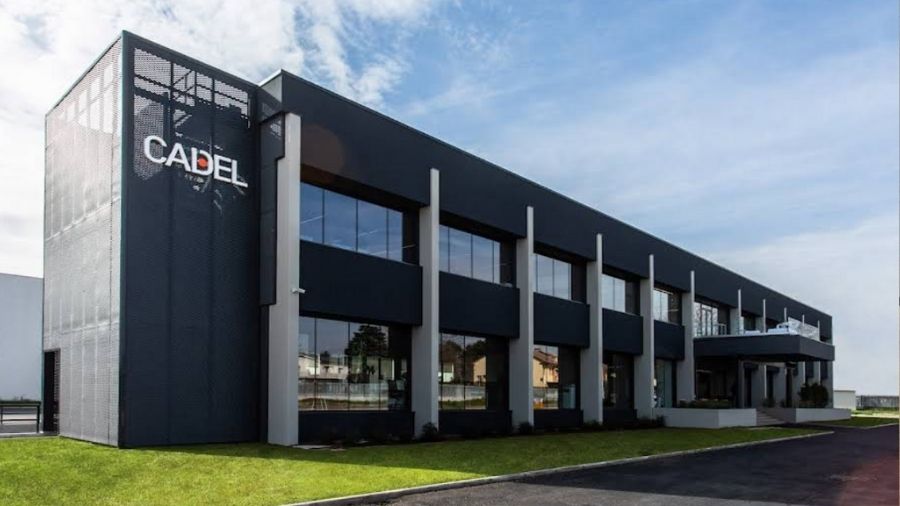
Francesco: Beyond being an incredible source of inspiration, Cadel was also very supportive in helping us gain visibility.
They allowed us to use their name and case study as a reference and hosted visits from potential customers. One of those visitors was Ensto, a Finnish group specializing in electrical systems, our first international customer.
So over time you built your network?
Francesco: Exactly. Over time, more companies trusted us, and the geographic reach of the software expanded. In 2016, we reached the United States with our first American customer, PVA.
Today, KanbanBOX is used in over 36 countries worldwide, including India, Japan, Australia, and Brazil.
Matteo: Many people have believed in us and our project over the years, introducing it in their companies or recommending us to customers. We don’t name them individually only because we’re afraid of forgetting someone, but we’re deeply grateful to all of them.
The same goes for everyone who has worked with us: we started as three people and are now a team of 45. Without each individual’s contribution, we wouldn’t be here celebrating 15 years today.
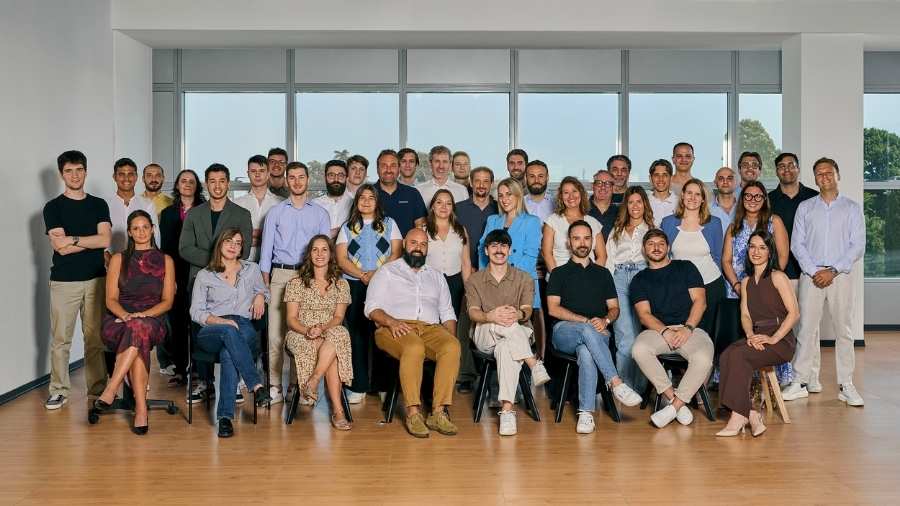
KanbanBOX team, July 2025
Today KanbanBOX is no longer “just” electronic kanban software, but a pull material management platform. Why did you expand its scope?
Guido: We listened to our customers. As they used the software, new needs emerged that went beyond kanban and fit into a broader pull material management perspective.
That led us to develop new features: extra-kanban cards to manage predictable demand peaks without altering consumption statistics; the Negotiation module; Synchro orders for non-kanban purchasing; Multiprocess for multi-stage production; the Sequencer to optimize production order.
And we’re not stopping here. When customers propose improvements, we analyze them and implement them if they align with Lean principles and bring value to the entire customer base.
Looking ahead, what are your goals for KanbanBOX?
Francesco: Our goal is to become the reference solution for all manufacturing and commercial companies managing material flows.
We want KanbanBOX to be seen as a concrete lever for improving and optimizing processes.
In other words, we want KanbanBOX to be the first name people think of when they ask: “How can I best manage my material flows, production, suppliers, and customers?”
Matteo: Another goal is to become the “nervous system” of the entire value chain, the tool that digitizes all Lean ways of managing processes and supply chains.
Not just kanban, but any material flow. We want KanbanBOX to be the software companies use to design, standardize, and govern those flows, from initial planning to daily execution, fully aligned with Lean principles.
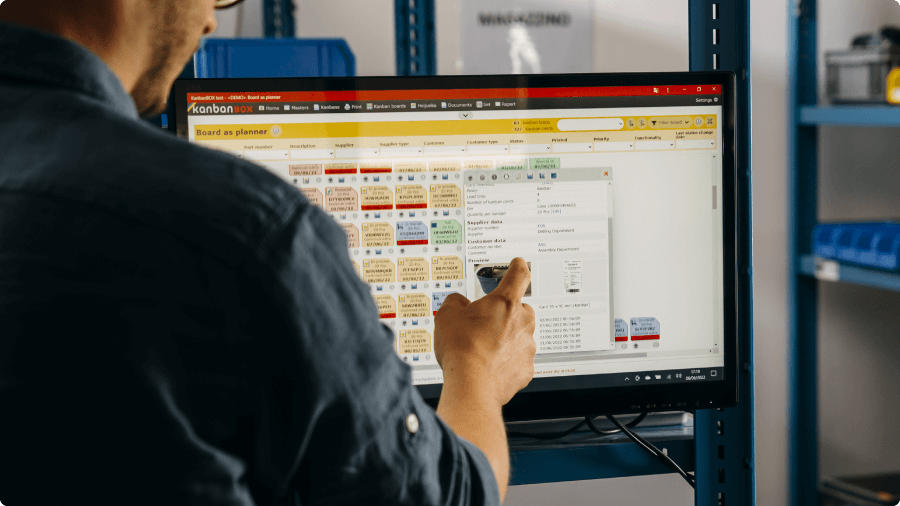
Guido: Last but not least: collaboration and transparency. From the very beginning, KanbanBOX was about building a network, a true ecosystem of interconnected Lean companies.
That principle hasn’t changed. It continues to guide the platform’s evolution, aiming to foster collaborative relationships that create value for all involved.
It’s a principle that guides not only our software, but our company itself: collaboration, transparency, and engagement… today, just as fifteen years ago.
Celebrating 15 years
To celebrate its first 15 years, KanbanBOX organized a special evening to reflect on the journey and toast to what lies ahead, a simple but meaningful moment to come together and celebrate this milestone.
You can view the event’s photos of the event here.